
Liquid silicone rubber injection moulding, HCR compression moulding, silicone extrusion and sheeting — platinum-cured, 20 to 90 Shore A, in general-purpose, food-contact and medical grades.
Silicone Rubber Product Types
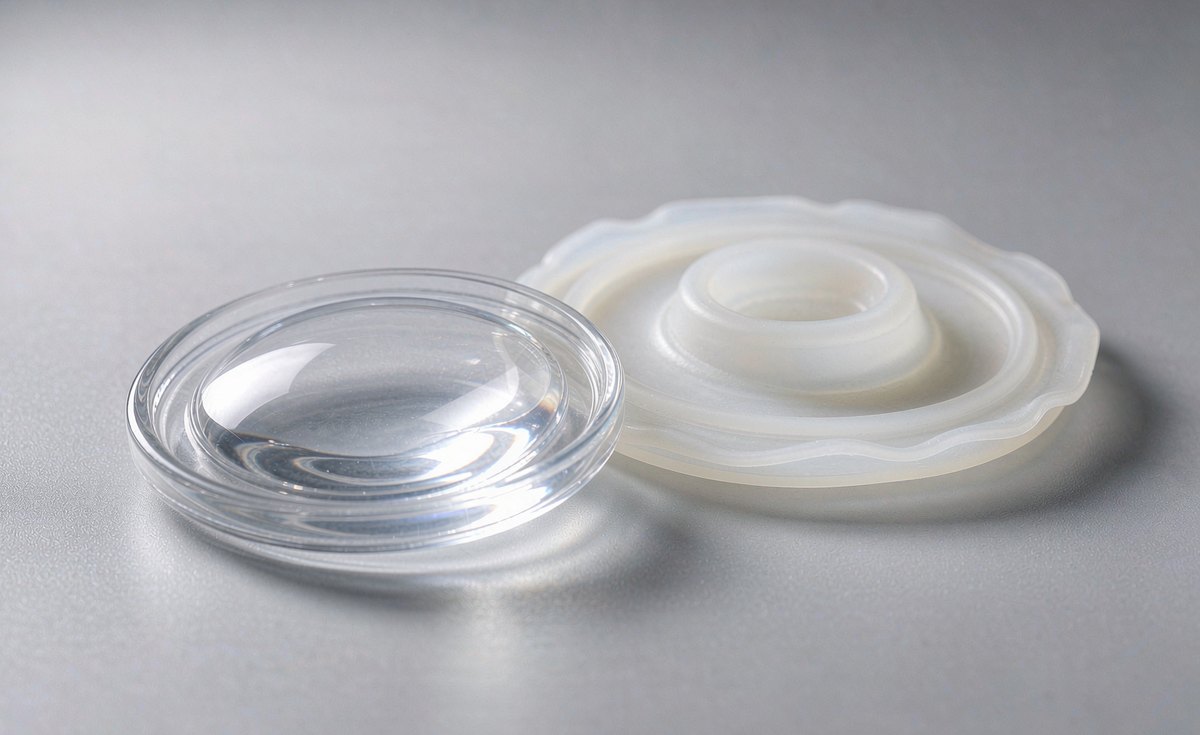
Liquid Silicone Rubber (LSR) Molding
Two-component platinum-cured LSR injected into a heated steel tool. The fastest route to high-volume precision silicone: tight tolerances, negligible flash, and fully automated demoulding.

Solid Silicone (HCR) Compression Molding
High-consistency rubber for thick sections, large parts and low-to-medium volume. Compression and transfer moulding handle geometries that LSR cannot fill economically.
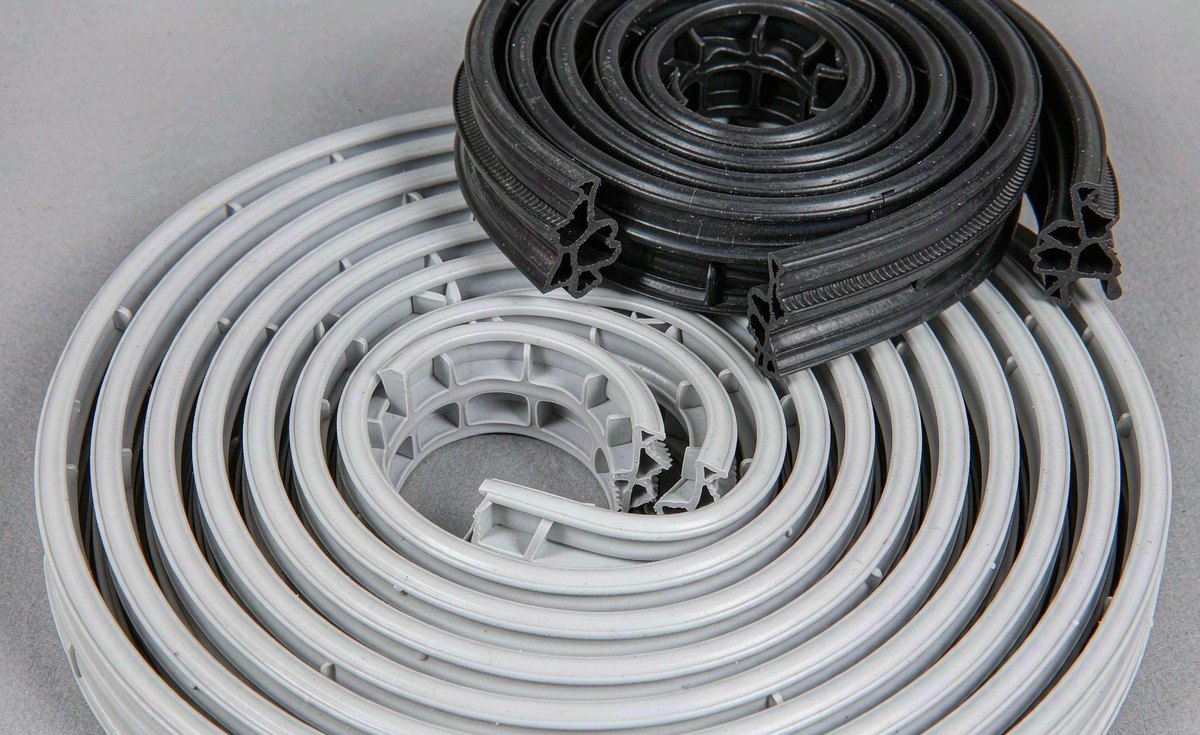
Silicone Extrusion Profiles
Continuous silicone profiles, sealing strips and cord in any constant cross-section. Platinum-cured for odour-free, non-tarnishing seals; cut to length or supplied in coils.

Silicone Tubing
Clear, translucent and coloured silicone tubing for fluid transfer, peristaltic pumps and insulation. Medical and food-contact grades available with full documentation.

Silicone Gaskets & Seals
Moulded O-rings, die-cut gaskets and custom sealing profiles. Compression set and durometer selected against your temperature and media, not against a catalogue page.

Silicone Keypads & Buttons
Moulded keypads with conductive carbon pills, tactile webs and backlit legends. Consistent actuation force, tested per key rather than per batch.
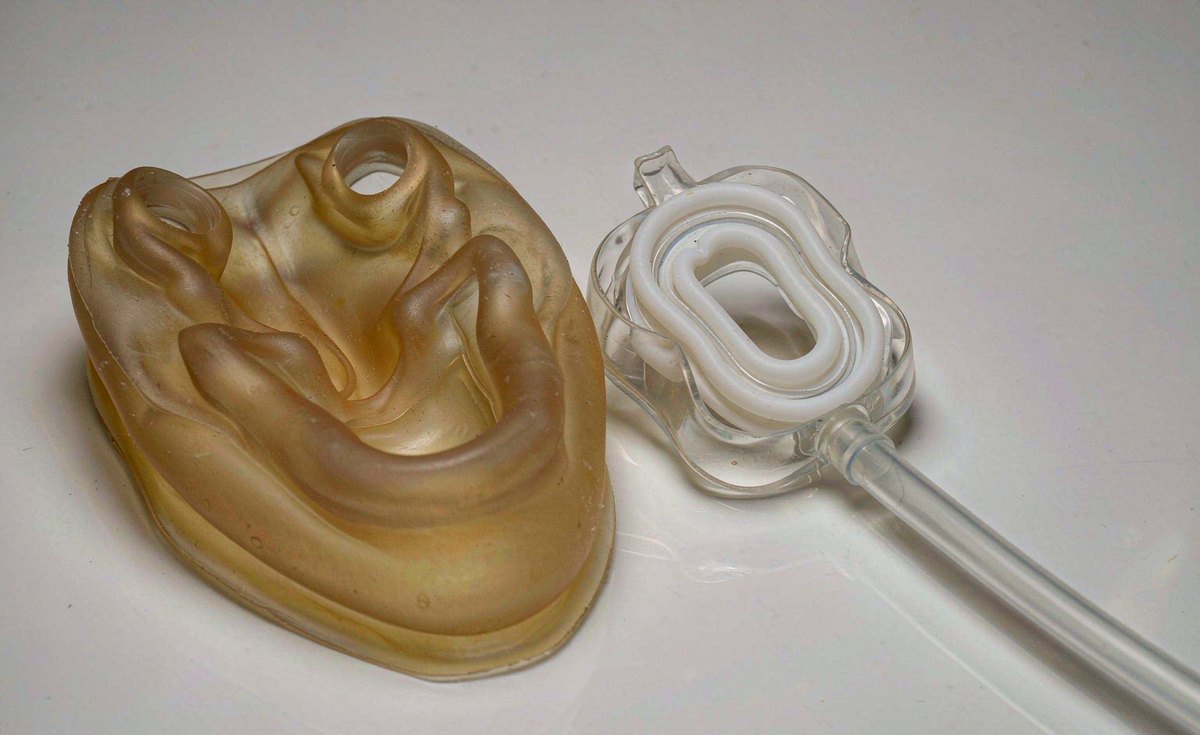
Medical Grade Silicone Parts
Mask cushions, seals, septa and fluid paths in grades supported by USP Class VI and ISO 10993 documentation. Made under a controlled, traceable process.

Silicone Sheets & Sheeting
Solid and sponge silicone sheet from 0.5 to 10 mm, in standard sheets or rolls. Slit, die-cut or laminated with adhesive backing to your drawing.
Silicone is not the right answer for every seal — it has poor resistance to petroleum oils and low tear strength compared with PU. Tell us the media and temperature and we will say so if another elastomer fits better.
What Is Silicone Rubber?
Silicone rubber is a synthetic elastomer built on a silicon-oxygen backbone rather than a carbon chain. That backbone is why it behaves unlike any organic rubber: it stays flexible from −60 °C to +200 °C, resists UV and ozone without additives, and does not support combustion into toxic smoke the way halogenated materials do.
For buyers, the practical consequence is a material that tolerates sterilisation, weathering and food contact in the same part — at a price roughly three to five times that of EPDM or nitrile. Specifying silicone where EPDM would do is one of the most common cost mistakes in sealing design.
LSR vs HCR vs RTV — Which Process?
| ファクター | LSR injection molding | HCR compression molding | RTV / cast |
|---|---|---|---|
| 粘度 | Pumpable, two-component | Dough-like, uncured sheet | Pourable liquid |
| Tooling cost | $$$ (steel, heated) | $$ (steel, heated press) | $ (room-temperature mould) |
| サイクルタイム | 30 s – 3 min | 3 – 20 min | 4 – 24 h cure |
| Economic volume | 10,000+ | 200 – 20,000 | 1 – 500 |
| Tolerance | Best | グッド | Loosest |
| 最適 | Small precision parts, high volume | Thick sections, large parts, low volume | Prototypes, potting, low-volume seals |
Process selection. Volume and part thickness decide the route; tolerance usually follows.
主要物件
| プロパティ | Typical range | Practical meaning |
|---|---|---|
| Service temperature | −60 °C to +200 °C (+250 °C short term) | Survives autoclave cycles and under-hood heat |
| Hardness | 20 – 90 Shore A | At 20 A the compound is soft and gel-like; at 90 A it behaves almost like a flexible plastic |
| Elongation at break | 100 – 700% | High elongation grades suit diaphragms and seals |
| Tear strength | 10 – 50 kN/m | Weaker than PU or natural rubber — avoid sharp edges in dynamic seals |
| Compression set | 10 – 30% (22 h at 175 °C) | The number that predicts whether a seal still seals after a year |
| Dielectric strength | 20 – 30 kV/mm | Used for insulation and cable jacketing |
| Chemical resistance | Good: water, alcohol, dilute acids. Poor: petroleum oils, concentrated acids, ketones | Check the media before specifying — this is where silicone projects fail |
Indicative values for general-purpose platinum-cured silicone. Grade selection shifts every row.
Silicone Grades
| Grade | Compliance / feature | Typical use |
|---|---|---|
| General purpose | Standard platinum cure | Industrial seals, gaskets, profiles |
| Food contact | FDA 21 CFR 177.2600, LFGB | Baking moulds, utensils, beverage tubing |
| メディカル | USP Class VI, ISO 10993 documentation | Mask cushions, septa, fluid paths |
| High temperature | Stable to 250–300 °C short term | Oven seals, heat shielding |
| Flame retardant | UL 94 V-0 capable grades | Transit, electrical enclosures |
| Conductive | Carbon-loaded, 10²–10⁵ Ω·cm | Keypad pills, EMI gaskets |
| Low compression set | < 15% at 175 °C | Long-life static seals |
| Oil-bleed / self-lubricating | Controlled surface oil | Connectors, pierceable septa |
Grade families. Certification documents are supplied per project against the specific compound used.
How LSR Injection Molding Works
- Two-component metering. Part A and part B are pumped in a 1:1 ratio, mixed and injected within minutes — the addition cure begins as soon as they meet, so the mixing head is the process bottleneck.
- Cold-runner or open injection. A cold runner keeps the compound below cure temperature until it reaches the heated cavity; open injection drops a shot directly into the tool.
- Heated cavity cure. A steel tool held at 150–200 °C cures the part in 30 seconds to 3 minutes, depending on wall thickness.
- Demoulding. LSR's low surface energy means parts release cleanly — often picked by robot, which is why LSR suits high-volume automation.
- Post-cure (optional). A 2–4 hour bake removes volatiles for medical and food-contact parts, reducing outgassing in service.
Dimensional Tolerances
| Dimension | Class M1 | Class M2 | Class M3 |
|---|---|---|---|
| Up to 4 mm | ±0.08 mm | ±0.10 mm | ±0.15 mm |
| 4 – 16 mm | ±0.15 mm | ±0.20 mm | ±0.25 mm |
| 16 – 40 mm | ±0.25 mm | ±0.35 mm | ±0.40 mm |
| 40 – 100 mm | ±0.45 mm | ±0.50 mm | ±0.70 mm |
Simplified from ISO 3302-1 tolerance classes for moulded rubber products. Confirm the class on the drawing — it changes part price more than any other single line.
アプリケーション
- Medical and laboratory — mask cushions, septa, peristaltic tubing, instrument seals.
- Food and beverage — baking moulds, dispensing tubing, dairy seals, ice-cube trays.
- Automotive and transit — weatherseals, connector seals, vibration isolators, cable grommets.
- エレクトロニクス — keypads, thermal interface pads, potting and encapsulation.
- インダストリアル — oven and autoclave seals, diaphragm valves, high-temperature gaskets.
- Consumer — wearable bands, baby products, kitchenware, collapsible containers.
品質管理
Incoming compound is checked for durometer, specific gravity and cure state before it reaches a press. In process, we monitor cavity pressure and cure time; on the finished part we test durometer, dimensions, compression set and, where specified, tensile and tear properties. For medical and food-contact work, the compound certificate and post-cure record travel with the batch.
Tell us the media, temperature and hardness — we will specify the compound
Send a drawing or a sample with your annual volume. We will recommend LSR, HCR or extrusion, quote the tooling, and flag it if another elastomer would serve you better and cost less.
Frequently Asked Questions
What is the difference between LSR and solid silicone?
LSR (liquid silicone rubber) is a two-component pumpable compound injected into a heated tool — fast cycles, tight tolerances, high volume. Solid silicone (HCR) is a dough-like compound compression or transfer moulded — slower, cheaper tooling, better for thick sections and lower volumes.
What hardness can you mould?
From 20 to 90 Shore A. At the soft end the compound is difficult to demould and dimensionally less stable; at 90 A it behaves more like a flexible plastic than a rubber, and a TPE or TPU may be the better choice for that application.
Is silicone rubber food safe?
Food-contact grades are available that meet FDA 21 CFR 177.2600 and LFGB requirements. The grade matters, not the material family — always specify the compliance you need, and we will supply the compound certificate with the batch.
Can silicone be bonded to plastic or metal?
Yes, with primer systems or by mechanical interlocking, and it can be overmoulded onto engineering plastics in a two-shot process. Adhesion should be validated on your actual substrate before tooling is committed.
What is the minimum order quantity?
The minimum order is 1,000 pieces for moulded silicone parts. Extruded profiles are quoted by length rather than by piece, usually from 300–1,000 metres, because they run continuously rather than in cycles.
How long does tooling take?
LSR tools typically run 25–40 days including sampling; compression moulds 15–25 days. Add 3–7 days for first-article approval, and expect one correction loop on parts with thin walls or tight flatness requirements.
 JA
 EN
 ES
 FR
 DE
 PT
 AR
 RU
 KO
 IT
 NL
 TR
 PL
 ID
