

- 1. What "tooling" means in extrusion
- 2. What drives die cost
- 3. Indicative prices
- 4. The costs that are not in the die quotation
- 5. Amortising tooling over the order
- 6. Die life and maintenance
- 7. Building a project budget
- 8. Cheap tooling: what it actually costs
- 9. What to ask a toolmaker
- 10. Frequently asked questions
What "tooling" means in extrusion
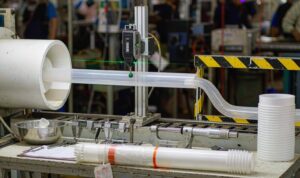
In injection moulding, tooling is one item: the mould. In extrusion, tooling is a set, and the die is only the first part of it.
| Item | 기능 | Usually quoted with the die? |
|---|---|---|
| Die head and flow plate | Distributes melt and forms the outer shape | 예 |
| Mandrel / torpedo (hollow sections) | Forms the internal shape | 예 |
| Calibration sleeve or plates | Sets final dimensions under vacuum | Sometimes |
| Calibration tank and vacuum adaptor | Housing and sealing for the calibrator | Rarely |
| Pre-cooling / sizing plates | Initial shape control before the tank | Rarely |
| Haul-off cleats or belts | Grips the specific section | 아니요 |
| Cut-off saw fixture / clamp | Holds the profile for a square cut | 아니요 |
| Punch or drilling fixtures | Secondary features | 아니요 |
| Packing crates / stillages | Protects the profile in transit | 아니요 |
Table 1 — The tooling set. Buyers who budget only the die are surprised by rows three to nine.
The number to plan around: the die is typically 40 – 55 % of total tooling cost. The calibration and downstream tooling is another 25 – 35 %, and the trials plus the first die correction are 15 – 25 %. A quotation that covers only the die is not a quotation for a production-ready line.
What drives die cost
| Driver | Low cost | High cost | Cost impact |
|---|---|---|---|
| Section complexity | Simple solid rectangle | Multi-cavity hollow with undercuts | 3 – 8× |
| Profile size | Under 40 mm | Over 250 mm | 2 – 5× |
| Number of flow paths | 1 | 4 – 6 (multi-strand) | 1.5 – 3× |
| Tolerance class | Commercial (E3) | Precision (E1) | 1.3 – 2× |
| 재료 | HDPE, PP | PVC rigid, PA, PC, filled | 1.2 – 1.6× |
| Die steel | Standard tool steel | Stainless or hardened for filled/PC | 1.2 – 1.8× |
| Co-extrusion | 아니요 | 2 – 3 layers | 1.5 – 2.5× |
| Surface finish requirement | Standard polish | Optical / high gloss | 1.3 – 2× |
Table 2 — Die cost drivers and their approximate multipliers. They compound — a large, tight-tolerance, three-layer PVC die is not 2× a simple one.
Indicative prices
These are European and Chinese toolroom ranges as of 2026 for a single-cavity profile die. Treat them as order-of-magnitude: a quotation is the only real number, and the spread between toolrooms for the same drawing is wide.
| Profile type | China toolroom | Europe toolroom | Lead time (China / Europe) |
|---|---|---|---|
| Simple solid section, < 50 mm | €1,800 – €4,000 | €6,000 – €12,000 | 3 – 4 wk / 6 – 8 wk |
| Simple hollow, < 50 mm | €2,800 – €6,000 | €9,000 – €18,000 | 4 – 5 wk / 7 – 9 wk |
| Complex hollow, 50 – 120 mm | €6,000 – €14,000 | €18,000 – €35,000 | 5 – 7 wk / 8 – 11 wk |
| Large section, 120 – 250 mm | €12,000 – €28,000 | €32,000 – €65,000 | 6 – 9 wk / 10 – 14 wk |
| PVC window profile die | €8,000 – €18,000 | €22,000 – €45,000 | 6 – 8 wk / 9 – 12 wk |
| Co-extrusion die, 2 layers | €10,000 – €22,000 | €28,000 – €55,000 | 7 – 9 wk / 10 – 13 wk |
| Co-extrusion die, 3 layers | €15,000 – €32,000 | €38,000 – €70,000 | 8 – 10 wk / 11 – 14 wk |
| Multi-strand die (4 strands) | €6,000 – €14,000 | €18,000 – €38,000 | 5 – 7 wk / 8 – 11 wk |
| Calibration sleeve / plates | €900 – €3,500 | €3,000 – €9,000 | 2 – 4 wk / 4 – 6 wk |
| Punch tool, per pattern | €1,200 – €4,000 | €5,000 – €14,000 | 2 – 4 wk / 4 – 7 wk |
Table 3 — Indicative tooling prices. A European die is not automatically better; a Chinese die from a toolroom that specialises in your material usually is better than a European general shop.
The costs that are not in the die quotation
| Item | Typical cost | Why it is forgotten |
|---|---|---|
| Die trials (3 – 5 attempts) | €800 – €3,000 each | Counted as "part of the die" |
| Die correction after trial | €500 – €4,000 | Assumed to be free; it is not |
| Calibration tank adaptor | €1,500 – €6,000 | Machine-specific, quoted separately |
| Haul-off cleats / belts | €1,000 – €5,000 | Only needed for the section |
| Saw clamp and support | €800 – €3,000 | Only needed for the section |
| Start-up material and scrap | €1,000 – €5,000 | 2 – 6 hours of output at scrap value |
| Packing tooling and stillages | €1,500 – €8,000 | Often the customer's responsibility, assumed to be the supplier's |
| Operator training and documentation | €500 – €2,500 | Not quoted, but real |
| Spare die insert / wear part | €500 – €3,000 | Should be bought with the die, not after a failure |
Table 4 — The costs that make a "€5,000 die" into a €9,000 project.
Die trials are the item that most often blows a budget, because a profile die is not a machined-to-drawing part — it is a flow device that has to be tuned. The first trial reveals where the flow is unbalanced, the die is corrected, and the second trial reveals the next imbalance. Three to five iterations is normal; two is lucky and eight means the die concept was wrong.
Myth: "the die is a one-off cost, so its price hardly matters." Tooling is a one-off cost, but tooling lead time 그리고 trial iterations are what decide when revenue starts. A €12,000 die delivered in 8 weeks beats an €8,000 die that takes 14 weeks and four trials, and the difference in project cash flow is far larger than the €4,000.
Amortising tooling over the order
| Annual volume | Tooling €8,000 | Tooling €20,000 | Tooling €45,000 |
|---|---|---|---|
| 1,000 m | €8.00 /m | €20.00 /m | €45.00 /m |
| 5,000 m | €1.60 /m | €4.00 /m | €9.00 /m |
| 20,000 m | €0.40 /m | €1.00 /m | €2.25 /m |
| 100,000 m | €0.08 /m | €0.20 /m | €0.45 /m |
| 500,000 m | €0.016 /m | €0.04 /m | €0.09 /m |
Table 5 — Tooling per metre, amortised over the first year. Below about 20,000 m the tooling dominates the piece price.
That table explains a fact of the industry that frustrates buyers: small orders are expensive per metre not because the extrusion is difficult but because the die cannot be spread. At 1,000 m, the tooling is more than the material. The usual resolutions are a stock profile (no tooling, but no design freedom), a shared or modular die, or accepting the amortised price and buying a larger first order.
Die life and maintenance
| 재료 | Die life before rework | Total life with maintenance | Main cause of wear |
|---|---|---|---|
| Rigid PVC | 3 – 6 years | 10 – 15 years | Corrosion, then flow-channel erosion |
| HDPE / PP unfilled | 5 – 10 years | 15+ years | Land wear, polishing loss |
| ABS / HIPS | 4 – 8 years | 12+ years | Land wear |
| PC | 3 – 6 years | 10+ years | High-temperature degradation deposits |
| PA | 3 – 5 years | 8 – 12 years | Corrosion, deposit build-up |
| Filled PP / PE (30 % CaCO₃) | 1.5 – 3 years | 5 – 8 years | Abrasive wear on the land |
| Glass-filled PA / PBT | 0.5 – 1.5 years | 2 – 4 years | Severe abrasion; hardened steel essential |
| WPC | 2 – 4 years | 6 – 10 years | Wood fibre abrasion plus deposit |
Table 6 — Die life. The glass-filled figure is why a hardened die costs 1.8× and lasts 5×.
| Maintenance task | Frequency | 비용 |
|---|---|---|
| Purge and clean flow channels | Every die change | 1 – 3 h labour |
| Polish the land and channels | Every 500 – 1,000 h | €200 – €800 |
| Check land dimensions | Annually | €150 – €400 |
| Reweld and re-machine the land | Every 3 – 8 years | 15 – 30 % of die cost |
| Replace calibration sleeve | Every 2 – 5 years | €900 – €3,500 |
Table 7 — Die maintenance. Skipping the annual land check is how a die goes from "needs polishing" to "needs re-machining".
Building a project budget
A worked example: a 45 mm wide hollow PVC trim profile, 180,000 m/year, five-year project.
| Line item | 비용 | 참고 |
|---|---|---|
| Extrusion die, single cavity | €9,500 | Complex hollow, PVC |
| Calibration sleeve + pre-plate | €2,800 | |
| Tank adaptor and vacuum plate | €2,200 | Machine-specific |
| Haul-off cleats | €1,600 | |
| Saw clamp | €1,200 | |
| Trials, 4 attempts | €4,800 | Material, labour, machine time |
| Die correction after trials | €2,400 | Two corrections |
| Start-up scrap, 4 h | €1,400 | |
| Packing stillage and dividers | €3,200 | |
| Documentation and training | €900 | |
| Total | €30,000 | |
| Per metre, year one | €0.167 | Over 180,000 m |
| Per metre, five years | €0.033 | Plus maintenance |
Table 8 — A full tooling budget. Note that the die is under a third of the total.
Compare that with the "€9,500 die" that a buyer might have budgeted. The real number is three times higher, and the difference is not padding — it is the calibration and downstream tooling without which the die cannot make a saleable profile.
Cheap tooling: what it actually costs
| Shortcut | Immediate saving | Later cost |
|---|---|---|
| Soft steel instead of hardened | 15 – 25 % | Die life 1/3; rework at 18 months |
| Single trial, no correction budget | €2,000 – €4,000 | Line runs out of tolerance; hand-sorting forever |
| Calibration made by the die shop, not a calibration specialist | €1,000 – €2,000 | Poor surface, dimensional drift, long start-up every run |
| No spare wear part | €500 – €2,000 | 4 – 8 weeks of downtime when it fails |
| Die designed from a 2D drawing only, no flow analysis | €800 – €1,500 | Two extra trials and a die that never fully balances |
| Reusing a machine's existing tank adaptor | €2,000 | Vacuum leaks, unstable calibration, permanent quality compromise |
Table 9 — The shortcuts and their bills. The calibration shortcut is the most common and the most damaging.
What to ask a toolmaker
- How many dies have you made in this material? A shop that makes PVC dies daily and one that makes them twice a year produce very different first trials.
- How many trials are included, and what does an extra one cost? Get the number in writing before the order.
- Who makes the calibration? If the answer is "we do", ask how many calibration units they have made and what material they were for.
- What steel, and what is the wear package for filled material? The answer should be specific — a grade name, not "good steel".
- Can I see a die you made for a similar section? Ask to see it running, not on a shelf.
- What is the correction policy? A die that will not balance is the toolmaker's problem, not the customer's, and the contract should say so.
- What is the lead time from drawing approval to first trial, and to production-ready? These are different numbers and the second is the one that matters.
The most valuable question: "What is your first-trial success rate on dies like this?" A good profile toolroom will answer with a number and a caveat. A shop that says "always" is either not measuring or not telling you. Industry-wide, a first trial that produces a saleable profile on the first attempt is roughly a 40 – 60 % event, and the toolrooms that admit it are the ones that budget for correction properly.
Frequently asked questions
Why is a profile die more expensive than a pipe die?
Because a pipe die is axisymmetric — the flow path is a simple annulus and the mathematics is closed-form. A profile die has to deliver melt at equal velocity to every point around an arbitrary outline, which requires individual flow balancing, manual tuning and trial iterations. That labour is the cost.
Can I use one die for several similar profiles?
Sometimes, with interchangeable inserts. A die with a replaceable land plate can produce a family of sections that share a common outer envelope. It saves 40 – 60 % against separate dies, but it constrains the designs to a family and the changeover takes 1 – 3 hours.
How much does a die modification cost after the part design changes?
A small change — a wall thickness, a corner radius — costs €500 – €2,000 if the flow channels do not need rework. A change to the outer outline is effectively a new die. If the change alters the section's balance, expect a trial.
Do I own the tooling?
This should be settled in the contract, not assumed. Standard practice varies: some suppliers retain ownership and grant exclusive use, others transfer ownership on payment. If you may ever change supplier, get ownership in writing, and get the die drawings too — a die without drawings is very hard to move.
Is a Chinese die as good as a European one?
It depends entirely on the toolroom, not the country. The best Chinese profile toolrooms produce dies that perform at European levels for 40 – 60 % of the price. The weakest produce dies that need six trials and are worn out in two years. Ask for references on your material and inspect a running die before ordering.
How long should I budget for the whole tooling programme?
For a complex hollow PVC profile: 6 – 8 weeks for the die, 4 – 6 weeks for the calibration, plus 3 – 5 trials at 1 – 2 weeks each including correction. Realistically 12 – 20 weeks from drawing approval to production-ready. Plan the launch date from that, not from the die lead time alone.
What happens if the die never balances?
It happens, usually because the flow concept was wrong for the section. The options are a flow-plate redesign (30 – 50 % of die cost) or a new die. A good toolroom will tell you which within two trials; a poor one will keep charging for corrections. This is why the correction policy matters more than the price.
Is flow simulation worth it for a profile die?
For simple sections, no — the toolroom's experience is faster. For large, complex or co-extrusion dies, yes: simulation typically removes one to two trials, which pays for itself. It is not a substitute for tuning, because profile die design still relies on the toolmaker's judgement about how much to starve each flow path.
Need a tooling budget before you commit to a profile?
Send the section drawing and the annual volume. We will give you a full tooling cost breakdown — die, calibration, downstream, trials — not just a die price, so the project budget is real.




 KO
 EN
 ES
 FR
 DE
 PT
 AR
 RU
 JA
 IT
 NL
 TR
 PL
 ID
