

Plastic vacuum forming is a versatile and cost-effective manufacturing process widely adopted in Malaysia’s thriving plastic industry. This technique heats a plastic sheet until it becomes pliable, then uses vacuum pressure1 to mold it into a specific shape. From packaging to automotive components, vacuum forming is essential for producing diverse products efficiently. In this blog post, we’ll highlight the top 10 plastic vacuum forming2 factories in Malaysia, explore the process in depth, and provide practical insights to guide your manufacturing decisions.
Vacuum forming creates custom plastic shapes3 by heating sheets and using vacuum pressure to mold them, ideal for packaging, automotive, and medical applications due to its cost-effectiveness and adaptability.
Understanding vacuum forming and its applications can help you leverage its benefits for your industry. Let’s dive into Malaysia’s leading factories, the process details, and key considerations for successful implementation.
Vacuum forming is cost-effective for low-to-medium volume production.Правда
It requires less expensive tooling compared to injection molding, making it ideal for smaller production runs.
Vacuum forming can produce parts with high precision.Ложь
While it offers good detail, it doesn’t match the precision of injection molding for complex geometries.
- 1. What are the Top 10 Plastic Vacuum Forming Factories in Malaysia?
- 2. What is Plastic Vacuum Forming?
- 3. What are the Typical Applications of Vacuum Forming?
- 4. What are the Pros and Cons of Vacuum Forming Compared to Other Technologies?
- 5. What is the Full Workflow of the Vacuum Forming Process?
- 6. What are the Key Design Considerations for Vacuum Forming?
- 7. What are the Related Technologies to Vacuum Forming?
- 8. Заключение
What are the Top 10 Plastic Vacuum Forming Factories in Malaysia?
Malaysia’s plastic manufacturing sector boasts several standout vacuum forming factories, each excelling in areas like packaging, automotive, and innovative hybrid technologies.

The top 10 plastic vacuum forming factories in Malaysia include Lee Soon Seng Plastic Industries, Integrated Formway, and MY3D World, renowned for their expertise in food packaging, automotive components, and 3D printing integration.
| Rank | Company Name | Location | Specialization | Website/Notes |
|---|---|---|---|---|
| 1 | Lee Soon Seng Plastic Industries Sdn Bhd (Benxon) | Kulai, Johor | Food packaging, over 4,000 products | benxonpack.com |
| 2 | Integrated Formway Sdn Bhd | Balakong, Selangor | Trays, blister packaging, ISO 9001:2015 certified | ifway.com.my |
| 3 | MY3D World Sdn Bhd | Puchong, Selangor | Vacuum forming, 3D printing services | my3dworld.n.my |
| 4 | Multiplex Packaging Sdn. Bhd. | Malaysia | Food and beverage packaging, cups, trays | mtppackaging.my |
| 5 | Exaltech Sdn. Bhd. | Malaysia | Automotive, food, beverage, high-quality forming | No URL, industry listing |
| 6 | Advance Vacuum Forming Sdn Bhd | Malaysia | Vacuum forming services | No URL, listed on supplierss.com |
| 7 | Multi Packaging Sdn. Bhd. | Malaysia | Packaging solutions, includes vacuum forming | No URL, listed on supplierss.com |
| 8 | PKG Plastics Technology Sdn Bhd | Malaysia | Assumed vacuum forming, industry listing | No URL, listed on suppliersof.com |
| 9 | Parade Manufacturing Sdn Bhd | Malaysia | Likely vacuum forming manufacturer | No URL, listed on suppliersof.com |
| 10 | Wah Ngai Industries (M) Sdn Bhd | Malaysia | Plastic manufacturing, includes vacuum forming | No URL, listed on suppliersof.com |
Основные сведения
-
Lee Soon Seng Plastic Industries (Benxon) dominates food packaging with an extensive product range.
-
Integrated Formway ensures quality with ISO certification, specializing in trays and blisters.
-
MY3D World blends vacuum forming with 3D printing, offering cutting-edge solutions.
Malaysia has a diverse range of vacuum forming factories.Правда
Factories cater to various sectors, from packaging to automotive, meeting diverse industry needs.
All top factories have publicly accessible websites.Ложь
Several are listed in industry directories but lack official websites.
What is Plastic Vacuum Forming?
Plastic vacuum forming is a manufacturing process that shapes термопластичные листы4 into custom forms using heat and vacuum pressure, prized for its efficiency and versatility.
Plastic vacuum forming, or vacuum thermoforming5, heats a plastic sheet, stretches it over a mold, and applies vacuum pressure to shape it, perfect for packaging, automotive, and medical uses.

Definitions and Terminology
Also known as vacuum thermoforming, this process heats a thermoplastic sheet to its forming temperature (typically 150–200°C) and uses a vacuum to mold it against a form. It’s often simply called "vacuum forming" or "thermoforming," with the core principle being the use of vacuum pressure to achieve the shape.
Классификация
-
Перспектива процесса:
- Male (Positive) Molding: Sheet stretches over a convex mold, shaping inner dimensions—common for packaging.
- Female (Negative) Molding: Sheet pulls into a concave mold, shaping outer dimensions—ideal for deeper parts.
-
Материальная перспектива:
- Includes ABS (impact-resistant), HIPS (cost-effective), PVC (rigid), PETG (transparent), and acrylic (clear).

- Перспектива применения:
- Упаковка: Blister packs, trays.
- Автомобили: Dashboards, trim.
- Медицина: Device housings, trays.
- Потребительские товары: Toys, casings.
Vacuum forming is primarily used for packaging.Ложь
It’s also widely applied in automotive, medical, and consumer goods industries.
Vacuum forming can use a variety of thermoplastic materials.Правда
Materials like ABS, HIPS, PVC, and PETG offer unique properties for different uses.
What are the Typical Applications of Vacuum Forming?
Vacuum forming shines in producing large, lightweight, and affordable plastic parts across various sectors.
Vacuum forming excels in упаковка6, автомобильный7, medical, and consumer goods, creating trays, enclosures, and components with its versatility and low tooling costs.

Упаковочная промышленность
Perfect for blister packs, clamshells, and food trays, vacuum forming excels due to its ability to produce thin-walled, large parts efficiently.
Automotive Sector
Used for prototyping and crafting interior parts like dashboards and door panels, where size and design flexibility matter.

Medical Field
Produces device housings, surgical trays, and packaging, often with materials like PETG for clarity and regulatory compliance.
Потребительские товары
Shapes toys, electronics enclosures, and household items, balancing lightweight design with visual appeal.
Vacuum forming is only suitable for small parts.Ложь
It’s great for large parts like dashboards and trays.
Vacuum forming is cost-effective for prototyping.Правда
Low tooling costs make it ideal for prototypes and small runs.
What are the Pros and Cons of Vacuum Forming Compared to Other Technologies?
Vacuum forming stands out with unique strengths and trade-offs when pitted against processes like injection molding and blow molding.
Vacuum forming offers снижение затрат на оснастку8 and faster setup than injection molding but less precision; it’s better for large, thin-walled parts than blow molding’s hollow structures.

Сравнение с литьем под давлением
-
Плюсы: Cheaper tooling (aluminum vs. steel), quicker setup9, suits large parts and low-to-medium volumes (100–10,000 units).
-
Cons: Lower accuracy, struggles with complex undercuts or fine details, not ideal for high-volume runs.
Сравнение с выдувным формованием
- Плюсы: Excels at non-hollow, thin-walled parts10 with complex shapes; no preforms needed.

- Cons: Can’t create fully enclosed hollow parts (e.g., bottles) without extra steps; less versatile for flat parts.
Vacuum forming is more cost-effective than injection molding for large parts.Правда
Lower tooling costs make it economical for large parts in smaller quantities.
Вакуумная формовка позволяет достичь такого же уровня детализации, как и литье под давлением.Ложь
Injection molding provides higher precision for intricate designs.
What is the Full Workflow of the Vacuum Forming Process?
The vacuum forming process is a structured sequence of steps, each vital for quality outcomes.
The vacuum forming process includes mold creation, material selection, heating, forming, cooling, and finishing, with temperature and vacuum pressure as key factors.

Пошаговая разбивка
-
Design and Mold Creation: Design via CAD; craft molds from aluminum or wood with vent holes and 3° draft angles.
-
Выбор материала: Pick a thermoplastic (e.g., ABS, HIPS) based on thickness (0.5–10mm) and properties.
-
Отопление: Heat the sheet to forming temperature (e.g., 150–200°C for ABS) using ovens or heaters.
-
Формирование: Apply vacuum (28–30 inches Hg) to shape the sheet over the mold; pre-stretch for deep draws.

-
Охлаждение: Cool the part with fans or air for 10–30 seconds to set the shape.
-
Обрезка и отделка: Trim excess with CNC or manual tools; add painting or assembly as needed.
Совместимость материалов
- ABS: Impact-resistant, forms at 150–200°C, great for automotive.

-
HIPS: Affordable, forms at 120–150°C, used in packaging.
-
ПВХ: Rigid, forms at 140–180°C, ideal for blisters.
-
PETG: Clear, FDA-approved, forms at 160–200°C, suits medical uses.
Material thickness affects the forming process.Правда
Thicker sheets allow deeper draws but need more heat.
All thermoplastics can be used in vacuum forming.Ложь
Only reshapeable thermoplastics work; thermosets don’t.
What are the Key Design Considerations for Vacuum Forming?
Effective vacuum forming design hinges on specific factors to ensure quality and manufacturability.
Key design considerations include draft angles, material thickness, undercuts, and vent holes, impacting part removal, strength, and finish.

Контрольный список для проектирования
-
Углы наклона: Minimum 3° on vertical surfaces for easy removal.
-
Толщина материала: Thicker (6–10mm) for complex shapes; thinner (0.5–2mm) for packaging.
-
Undercuts: Minimize deep undercuts; use split molds if needed.
-
Vent Holes: Add sufficient holes to avoid air traps.
-
Накладные линии: Plan clear lines for post-forming trimming.
Выбор процесса Принятие решений
Vacuum forming suits:
- Low-to-medium volumes (100–10,000 parts).

-
Large, thin-walled parts.
-
Cost-sensitive projects needing affordable tooling.
Дерево решений:
-
Step 1: Large, thin-walled part? → Yes → Consider vacuum forming.
-
Step 2: High-volume needed? → No → Vacuum forming fits.
-
Step 3: Complex undercuts? → No → Vacuum forming works.
-
Step 4: Cost a priority? → Yes → Vacuum forming is ideal.
При вакуумной формовке углы не являются обязательными.Ложь
They’re critical for part removal and preventing damage.
Vacuum forming is suitable for high-volume production.Ложь
It’s best for low-to-medium volumes; injection molding excels in high volumes.
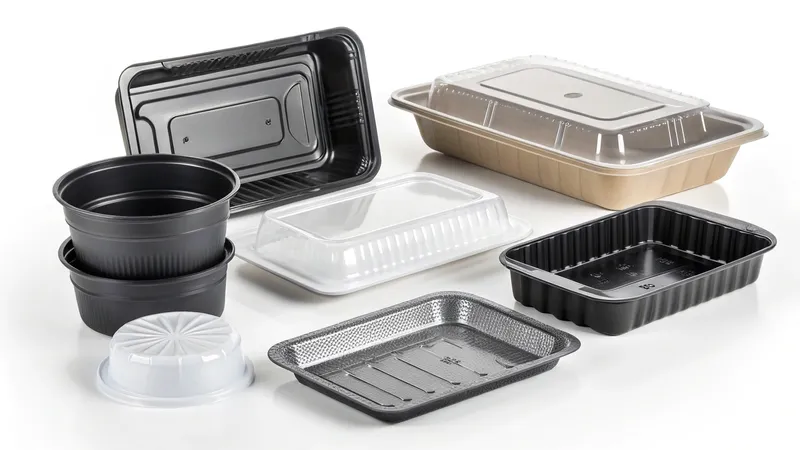
Vacuum forming integrates with a network of technologies that enhance its production capabilities.
Related technologies include plastic extrusion for sheet production, CNC machining for trimming, and blow molding for hollow parts, each supporting vacuum forming.
Технологии для разведки и добычи
-
Экструзия пластмассы: Makes the thermoplastic sheets used in vacuum forming.
-
3D-печать: Crafts rapid mold prototypes.
Технологии переработки и сбыта
-
Обработка с ЧПУ: Trims and finishes parts precisely.
-
Литье под давлением: Handles high-volume, high-precision production.
Complementary Technologies
-
Выдувное формование: Creates hollow parts like bottles.
-
Вращательное формование: Forms large, uniform hollow items.
Vacuum forming can be combined with 3D printing for mold creation.Правда
3D printing enables fast, affordable mold prototyping.
Vacuum forming is a standalone process with no related technologies.Ложь
It works with extrusion, machining, and other molding methods.
Заключение
Plastic vacuum forming is a vital process in Malaysia’s plastic industry, offering an economical and flexible solution for diverse products. The top 10 factories, such as Lee Soon Seng Plastic Industries and Integrated Formway, showcase Malaysia’s prowess in this field. By grasping the process, applications, and design essentials, you can optimize your manufacturing choices. Check out these factories and consider vacuum forming for your next project to tap into its cost-effective potential.
-
Learn about the role of vacuum pressure in shaping plastic, which is crucial for achieving high-quality products. ↩
-
Explore the advantages of plastic vacuum forming to understand its impact on manufacturing efficiency and cost savings. ↩
-
Discover the various industries that utilize custom plastic shapes, enhancing your knowledge of market applications. ↩
-
Learn about thermoplastic sheets and their significance in manufacturing processes, including vacuum forming. ↩
-
Explore this link to understand the detailed applications and benefits of vacuum thermoforming in various industries. ↩
-
Discover the innovative applications of vacuum forming in packaging, including its advantages for creating efficient and cost-effective solutions. ↩
-
Learn about the significance of vacuum forming in automotive design and production, particularly for creating lightweight and customizable parts. ↩
-
Understanding the advantages of lower tooling costs can help you make informed decisions in manufacturing. ↩
-
Exploring quicker setup benefits can enhance your knowledge of efficient manufacturing practices. ↩
-
Learning about thin-walled parts can inspire innovative design solutions and cost savings in production. ↩






 RU
 EN
 ES
 FR
 DE
 PT
 AR
 JA
 KO
 IT
 NL
 TR
 PL
 ID
