
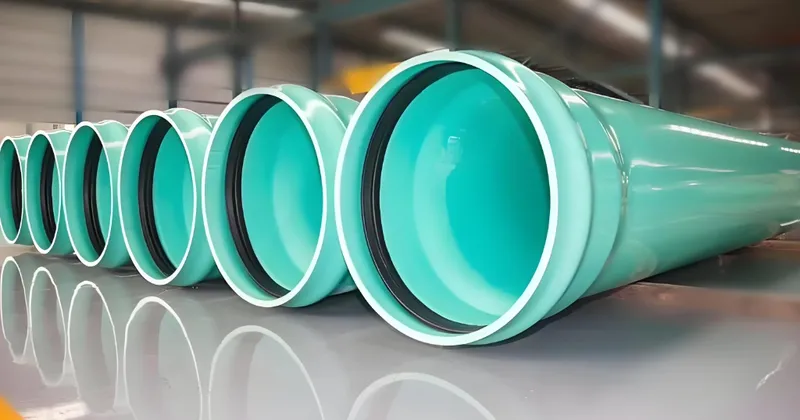
Plastic manufacturing encompasses a variety of techniques, each tailored to specific product types and production needs. Among these, plastic extrusion1 stands out for its ability to produce long, continuous shapes with uniform cross-sections—think pipes, tubing, and window frames. However, other methods like injection molding, blow molding, compression molding, rotational molding, and 3D printing offer distinct advantages for different applications. Understanding these differences is essential for choosing the right manufacturing process for your project.
Plastic extrusion creates continuous, uniform profiles like pipes and sheets, while methods like injection molding excel at producing complex, discrete parts such as toys and automotive components, each with unique strengths in shape, volume, and cost.
In this blog post, we’ll dive into the definitions, classifications, applications, pros and cons, workflows, material compatibility, design limitations, and decision-making tools for plastic extrusion and other key plastic manufacturing methods. By the end, you’ll know when to opt for extrusion and how it fits into the broader plastic manufacturing landscape.
Plastic extrusion is only suitable for simple shapes.False
While extrusion excels at uniform cross-sections, advanced die designs enable complex profiles like multi-lumen tubing or co-extruded layers with multiple materials.
- 1. What Is Plastic Extrusion and How Does It Compare to Other Methods?
- 2. When Should You Use Plastic Extrusion Over Other Methods?
- 3. What Materials Are Compatible with Plastic Extrusion?
- 4. What Are the Pros and Cons of Plastic Extrusion Compared to Other Methods?
- 5. What Is the Workflow of Plastic Extrusion?
- 6. What Are the Design Limitations of Plastic Extrusion?
- 7. How Do You Choose Between Plastic Extrusion and Other Methods?
- 8. What Are the Applications of Plastic Extrusion?
- 9. How Does Plastic Extrusion Fit Into the Broader Manufacturing Landscape?
- 10. Conclusion
What Is Plastic Extrusion and How Does It Compare to Other Methods?
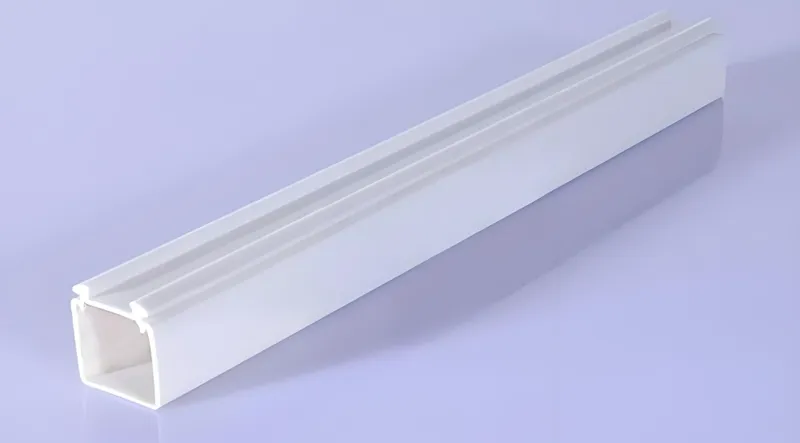
Plastic extrusion is a continuous process where molten plastic is forced through a die to form long shapes with consistent cross-sections, such as pipes, sheets, or profiles. Unlike other methods that produce discrete parts, extrusion is optimized for high-volume production of uniform, linear products.

Other methods like injection molding, blow molding, and rotational molding are better suited for complex, three-dimensional, or hollow parts, each offering unique precision, material use, and cost benefits.
Here’s a quick comparison:
| Process | Definition | Typical Products |
|---|---|---|
| Extrusion | Continuous shaping through a die | Pipes, sheets, profiles |
| Injection Molding | Injecting molten plastic into a mold | Complex parts, high volume |
| Blow Molding | Extruding a tube and blowing it into a mold | Bottles, hollow containers |
| Compression Molding | Compressing plastic in a heated mold | Large, simple parts |
| Rotational Molding | Rotating a mold while heating to coat the inside | Large, hollow parts |
| 3D Printing | Layering plastic to build a part | Prototypes, custom parts |
This table underscores how extrusion’s continuous nature sets it apart from batch processes like injection molding2 or 3D printing, which focus on discrete, often intricate parts.
When Should You Use Plastic Extrusion Over Other Methods?
Plastic extrusion shines in scenarios requiring long, continuous parts with uniform cross-sections. Here’s why it might be your best choice:

-
Continuous Production: Perfect for high-volume runs of items like pipes or window frames, offering efficiency and lower per-unit costs.
-
Material Efficiency: Produces minimal waste—no runners or sprues—ideal for cost-conscious projects.
-
Lower Tooling Costs: Extrusion dies are simpler and cheaper than molds used in injection or blow molding.
For complex 3D shapes or small production runs, however, injection molding or 3D printing3 may outshine extrusion due to their precision and flexibility.
Extrusion is always cheaper than other methods.False
While extrusion offers lower tooling costs, injection molding can be more cost-effective for large runs of complex parts due to faster cycle times.
What Materials Are Compatible with Plastic Extrusion?
Material choice is pivotal in manufacturing decisions. Here’s how extrusion4 stacks up:

-
Extrusion: Primarily uses thermoplastics like polyethylene (PE), polypropylene (PP), polyvinyl chloride (PVC), and polystyrene (PS)—ideal for continuous processing.
-
Injection Molding: Supports a wider range, including thermoplastics, thermosets, and reinforced plastics, offering greater versatility.
-
Blow Molding: Typically uses thermoplastics like PE and PP for hollow parts.
-
Compression Molding: Often employs thermosets and reinforced plastics for high-strength components.
-
Rotational Molding: Works with thermoplastics, especially for large, hollow items.
-
3D Printing: Uses a growing range of thermoplastics but remains limited compared to traditional methods.
Opt for extrusion when your project involves thermoplastics5 and continuous, uniform shapes without complex material needs.
What Are the Pros and Cons of Plastic Extrusion Compared to Other Methods?
Each method has trade-offs. Here’s a detailed look:

Plastic Extrusion
-
Pros:
-
Continuous production for high volumes.
-
Lower tooling costs than injection molding.
-
Minimal waste due to no runners or sprues.
-
-
Cons:
-
Limited to constant cross-sections.
-
Not ideal for complex 3D shapes or tight tolerances.
-
Injection Molding
-
Pros:
-
High precision for complex 3D shapes.
-
Fast cycles for large volumes.
-
Broad material compatibility.
-
-
Cons:
-
High initial tooling costs.
-
Less economical for small runs.
-
Blow Molding
-
Pros:
-
Perfect for hollow parts like bottles.
-
Cost-effective for large, thin-walled items.
-
-
Cons:
-
Restricted to hollow shapes.
-
Lower precision than injection molding.
-
Compression Molding
-
Pros:
-
Great for large, simple parts and thermosets.
-
Lower tooling costs than injection molding.
-
-
Cons:
-
Slower cycle times.
-
Less precision, more labor-intensive.
-
Rotational Molding
-
Pros:
-
Produces large, hollow parts with uniform thickness.
-
Cost-effective tooling for big items.
-
-
Cons:
-
Slow process, not suited for high volumes.
-
Limited material options.
-
3D Printing
-
Pros:
-
Ideal for prototypes and custom parts.
-
No tooling costs, perfect for small runs.
-
-
Cons:
-
Slow for mass production.
-
Limited material and size options.
-
Extrusion excels at high-volume, uniform parts, while other methods dominate in complexity, precision, or specific geometries.
What Is the Workflow of Plastic Extrusion?
Extrusion’s workflow highlights its efficiency for continuous production:

-
Feeding: Plastic pellets enter the extruder’s hopper.
-
Melting: A screw melts the plastic in a heated barrel.
-
Shaping: Molten plastic is forced through a die to form the profile.
-
Cooling: The extrudate is cooled (air or water) to solidify.
-
Cutting/Coiling: The continuous shape is cut or coiled.
Key parameters—temperature, screw speed, die design, and cooling rate—affect accuracy and finish. Compare this to injection molding, where plastic is injected into a mold, cooled, and ejected—a batch process suited for discrete, complex parts.
Extrusion’s continuous nature makes it ideal for long, uniform products, unlike the batch workflows of other methods.
What Are the Design Limitations of Plastic Extrusion?
Design constraints vary by method:

-
Extrusion: Restricted to constant cross-sections (e.g., pipes). Advanced dies add complexity, but it’s still less versatile than injection molding.
-
Injection Molding: Handles intricate 3D shapes and undercuts but requires careful wall thickness design.
-
Blow Molding: Limited to hollow, thin-walled parts.
-
Rotational Molding: Best for large, hollow items with less precision.
-
3D Printing: Excels at complex geometries but is size- and strength-limited.
Choose extrusion for uniform, continuous designs; opt for alternatives for complex or variable shapes.
How Do You Choose Between Plastic Extrusion and Other Methods?
Here’s a decision-making checklist:

-
Shape and Geometry:
-
Uniform cross-section? → Extrusion.
-
Complex 3D shape? → Injection molding or 3D printing.
-
-
Production Volume:
-
High volume, simple parts? → Extrusion or injection molding.
-
Low volume or prototypes? → 3D printing.
-

-
Material Needs:
-
Thermoplastics only? → Extrusion, blow molding, or injection molding.
-
Thermosets? → Compression or injection molding.
-
-
Cost:
-
Low tooling budget? → Extrusion or 3D printing.
-
High-volume efficiency? → Injection molding or extrusion.
-
-
Tolerances:
-
Tight tolerances needed? → Injection molding.
-
Standard acceptable? → Extrusion.
-
This guide balances technical requirements with budget and goals.
What Are the Applications of Plastic Extrusion?
Extrusion’s versatility spans industries:

-
Construction: PVC pipes, window frames, weather stripping.
-
Packaging: Films, sheets, bags.
-
Automotive: Fuel lines, trim, insulation.
-
Medical: Tubing for diagnostics and fluid transfer.
Extrusion is a cornerstone for industries needing long, uniform plastic components.
How Does Plastic Extrusion Fit Into the Broader Manufacturing Landscape?
Extrusion connects to a wider ecosystem:

-
Upstream: Polymer production and compounding.
-
Downstream: Cutting, welding, or assembly.
-
Related Processes:
-
Thermoforming: Shapes extruded sheets into trays.
-
Calendaring: Produces flat items like flooring.
-
These links integrate extrusion into a full production strategy.

Conclusion
Plastic extrusion is unmatched for producing continuous, uniform parts like pipes and sheets, offering efficiency, material savings, and lower tooling costs. Yet, for complex 3D parts or small runs, injection molding, blow molding, or 3D printing may be better suited. By weighing process specifics, material options, and design needs, you can optimize your manufacturing choice.
-
Explore this resource to understand the intricacies of plastic extrusion and its applications in various industries. ↩
-
Learn about the benefits of injection molding, a key method for producing complex parts efficiently and effectively. ↩
-
Discover the unique advantages of 3D printing and how it complements traditional manufacturing techniques in creating custom parts. ↩
-
Explore the benefits of extrusion to understand why it's a preferred method for high-volume production of uniform parts. ↩
-
Learn about various thermoplastics to see how they impact manufacturing processes and material choices. ↩




 EN
 ES
 FR
 DE
 PT
 AR
 RU
 JA
 KO
 IT
 NL
 TR
 PL
 ID
